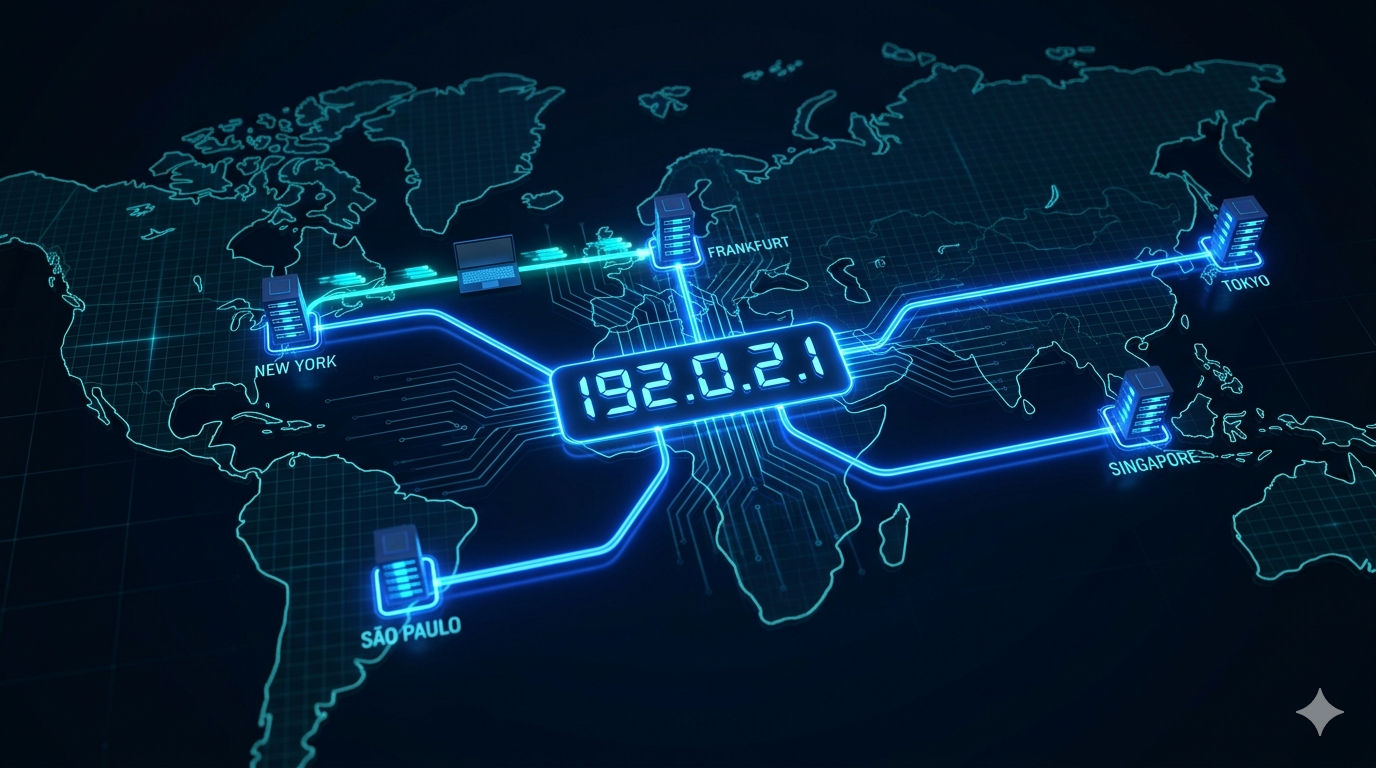
Tag: ip

  • Anycast: The Magic of One IP on Thousands of Servers

    Anycast: The Magic of One IP on Thousands of Servers

    How a single IP address can simultaneously live on hundreds of machines across the globe — and why that’s one of the internet’s most elegant tricks.

    The Problem Anycast Solves

    Imagine you’re in Tokyo, trying to reach a DNS server located in New York. Every query you make travels across the Pacific Ocean, endures 150+ milliseconds of latency, and returns the same way. For a single request, that’s tolerable. For millions of users doing it constantly, it’s a serious bottleneck.

    (more…)
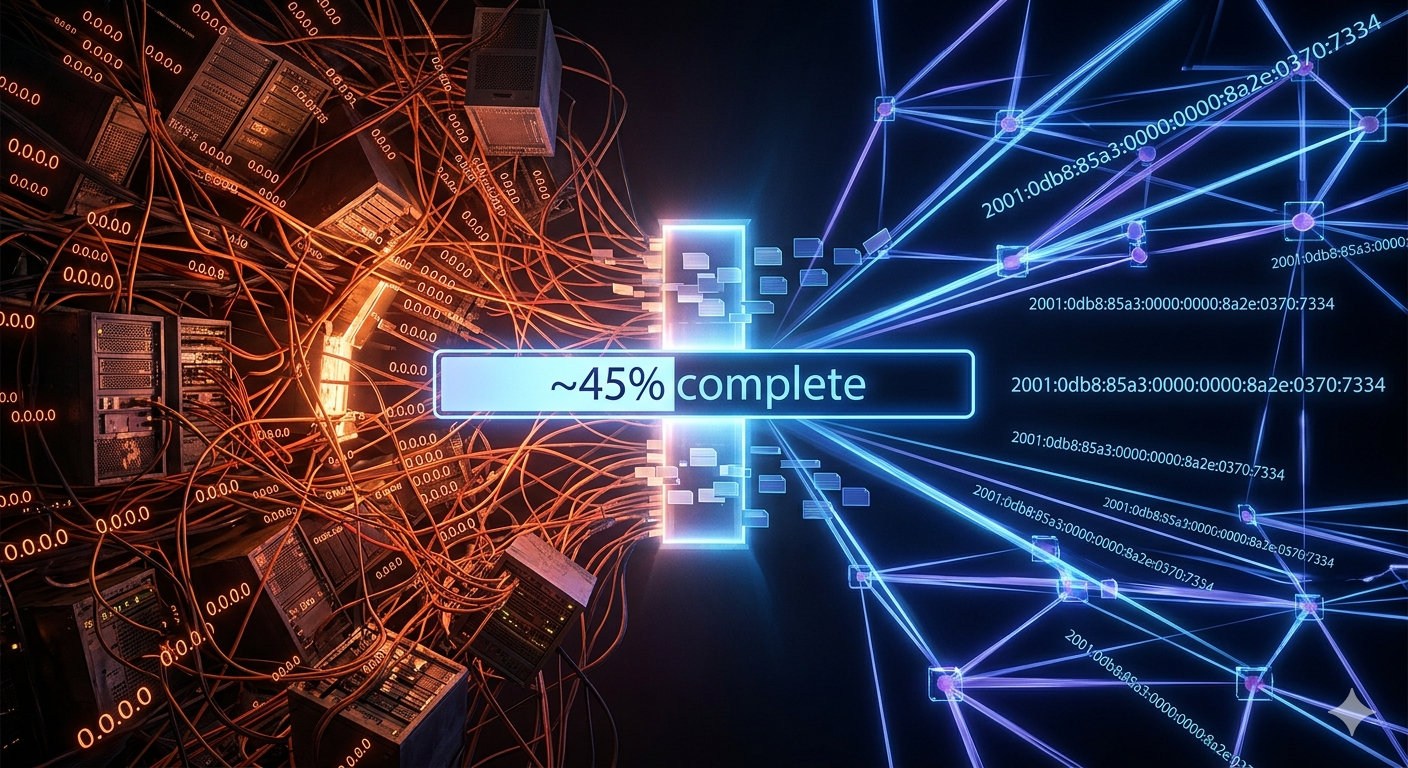
  • IPv6: Why the Transition Is Still Incomplete — and What Lies Ahead

    IPv6: Why the Transition Is Still Incomplete — and What Lies Ahead

    The internet has been “running out of addresses” for decades. The fix has existed since 1998. So why are we still not done?

    The Problem That Was Supposed to Be Solved by Now

    IPv4, the addressing protocol that underpins the modern internet, was designed in 1981 with a pool of roughly 4.3 billion addresses. At the time, that seemed infinite. By the early 1990s, it was clear it wasn’t.

    IPv6 was standardized by the IETF in 1998 (RFC 2460), offering a staggering 340 undecillion addresses — enough for every atom on Earth’s surface to have its own IP. The plan was straightforward: migrate, deprecate IPv4, move on.

    It is now 2026. IPv4 is still the dominant protocol. The transition is, generously, about halfway done.

    This is a story about technical debt, economic incentives, human inertia, and one of the most complex infrastructure migrations in computing history.

    (more…)
  • BGP — The Protocol That Holds the Internet Together

    You use it every time you open a browser. You’ve probably never heard of it. And when it breaks, the internet breaks.

    Introduction

    The internet is not a single network. It’s a vast, chaotic collection of tens of thousands of independent networks — run by ISPs, universities, corporations, cloud providers, and governments — all somehow agreeing to talk to each other. What makes this possible? A single routing protocol called BGP: the Border Gateway Protocol.

    (more…)
  • IP Addresses: What They Are and How They Work

    Every time you open a browser, visit a website, send an email, or stream a video, a complex coordination process takes place behind the scenes between millions of devices around the world. At the heart of this coordination is the IP address — a unique identifier without which the modern internet simply could not exist.

    (more…)
  • From Islands of Logic to a Global Web: The Birth of Networking

    In the early days of computing, a computer was an island. It was a massive, room-sized machine that crunched numbers in solitude. If you wanted to share data with another computer, you didn’t send an email; you physically carried a magnetic tape or a stack of punch cards across the room—a method affectionately known as “Sneakernet.”

    The evolution from these digital islands to the hyper-connected world of 2026 is a journey of military necessity, academic curiosity, and a few “Aha!” moments that changed history.

    (more…)