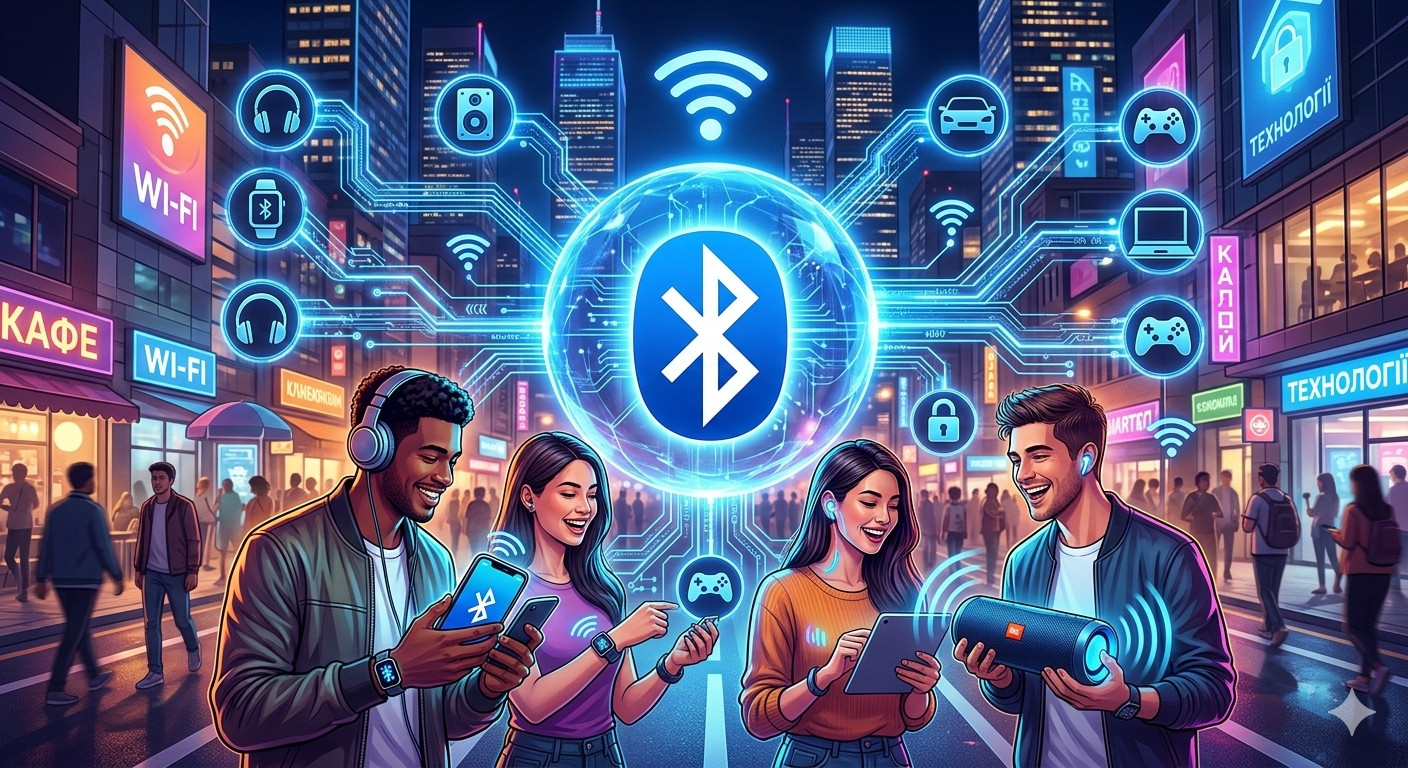
Bluetooth is a short-range wireless communication technology that allows devices to exchange data without the need for cables or an internet connection. Operating on the 2.4 GHz radio frequency band, it enables seamless connectivity between smartphones, headphones, keyboards, medical devices, and countless other gadgets.
A Brief History
The technology was developed by Ericsson in 1994 and later standardized by the Bluetooth Special Interest Group (SIG), founded in 1998 by industry giants including IBM, Intel, Nokia, and Toshiba. The name “Bluetooth” is a tribute to Harald Bluetooth, a 10th-century Danish king who united warring Scandinavian tribes — a fitting metaphor for a technology designed to unite different communication protocols.
How It Works
Bluetooth uses a technique called frequency-hopping spread spectrum, rapidly switching between 79 different frequencies up to 1,600 times per second. This approach minimizes interference from other wireless signals and makes communication more secure. Devices form small networks called piconets, where one device acts as the master and up to seven others serve as active slaves.
Bluetooth Versions
Over the years, Bluetooth has evolved significantly:
| Version | Year | Key Feature |
|---|---|---|
| 1.0 | 1999 | Initial release, up to 1 Mbps |
| 2.0 + EDR | 2004 | Enhanced Data Rate, up to 3 Mbps |
| 4.0 (BLE) | 2010 | Bluetooth Low Energy for IoT devices |
| 5.0 | 2016 | 2× speed, 4× range, 8× broadcasting capacity |
| 5.4 | 2023 | Improved efficiency and security |
Common Use Cases
Bluetooth is virtually everywhere in modern life:
- Audio — wireless headphones, earbuds, and speakers
- Peripherals — keyboards, mice, and game controllers
- Health & Fitness — smartwatches, heart rate monitors, glucose meters
- Smart Home — smart locks, lighting, and thermostats
- Automotive — hands-free calling and audio streaming in cars
- File Transfer — sharing photos and documents between devices
Bluetooth Low Energy (BLE)
One of the most significant innovations in Bluetooth history is BLE, introduced with version 4.0. Designed for devices that run on small batteries for months or even years, BLE is the backbone of the Internet of Things (IoT). It powers everything from fitness trackers to retail beacons to medical implants.
Security Considerations
While Bluetooth is generally safe, it is not without vulnerabilities. Threats like Bluejacking (sending unsolicited messages), Bluesnarfing (unauthorized data access), and BIAS attacks have been documented over the years. To stay protected, users are advised to:
- Keep devices updated with the latest firmware
- Disable Bluetooth when not in use
- Avoid pairing devices in public places
- Use devices that support the latest Bluetooth security standards
The Future of Bluetooth
With the rise of smart cities, connected healthcare, and industrial IoT, Bluetooth continues to expand its role. Upcoming features focus on higher data throughput, improved location accuracy (Bluetooth direction finding), and better coexistence with Wi-Fi and 5G networks.
Bluetooth SIG reports that over 5 billion Bluetooth-enabled devices are shipped annually — a testament to how deeply this technology has woven itself into the fabric of modern connectivity.